
I began with a question: What does it mean to practice peace now?
“I don’t believe in peace,” says Jon Ramer, a longtime peacebuilder and co-founder of Compassion Games International.
He lets that sit for a moment before explaining. “I think it’s either you’re practicing or you’re not.”
Believing in peace, for Jon, can place it somewhere beyond us, a future condition we hope humanity will eventually reach. “Being peace is right where I am, right here, right now,” he says. “And I want to live that and be available to you and available to everybody around me to see if we can work this thing out.”
Jon also describes peace as “relationship without domination.” He leaves room for what happens when we fail within that relationship.
“Part of peace is learning how to repair,” he says.
Where We Begin
Rev. Deborah Moldow, a longtime peace advocate whose work has included international peace movements and the United Nations, begins with the consciousness from which we meet the world. She carries a question that can travel almost anywhere: What’s mine to do here? How can I be a force for healing and peace?
Great Transition Stories team member Markabadi turns the question inward. “How can we ask of ourselves the things that we’re waiting for to change outside of ourselves?” he says. During Meeting This Moment, he spoke about taking responsibility for our own center and becoming aware of the stories we carry into everyday relationships.
When I asked Ben Bowler, executive director of UNITY EARTH and founder of World Weavers, about peace across difference, he kept returning to the willingness to remain in relationship.
“We don’t need to agree on everything,” he says. “Thank goodness, because that would be an impossible task. Agreement’s not even the goal.”
Ben says: “I don’t agree with you, but I love you, and we are connected, and we’re going to hang in there together.”
The hanging in there matters. Ben has spent years collaborating with people and organizations devoted to peace and unity, and those relationships contain all the things human relationships contain—hurt, competing priorities, questions of money and recognition, different strategies and personalities.
Seeing the Person—and the Pattern
Author and systems thinker Barry Oshry has spent more than 50 years studying the patterns that emerge within human systems, including what happens when we encounter someone we experience as “other.”
We see part of someone and construct a story around what we cannot see. Soon we are responding to the story as though it were the whole person.
Barry has spent decades noticing how much our place within a system shapes what we see. The patterns are remarkably consistent: People in similar positions tend to experience the system—and one another—in similar ways.
“Much that seems personal is not personal,” Barry says.
His practice is to meet the gaps in what he knows with curiosity. When a story begins forming about someone he does not know, he returns to what he knows—and what he doesn’t.
“But the point is, I don’t know that,” he says. “Can you see them as they are: like you, different from you, and unique?”
When Peace Needs Water
Yemeni peacebuilder Muna Luqman has lived through airstrikes, street fighting, and siege. She has mediated between communities, organized women across political divisions, built humanitarian responses, advocated internationally, and spent three years working inside the United Nations after years of challenging its approach to Yemen.
When I ask what peace means to her now, she begins with dignity and safety. Food on the table. Salaries. The basic conditions through which people can live.
Even a ceasefire, Muna says, cannot by itself be called peace when people are left without livelihoods, functioning services, or the means to care for their families.
“Warlords are feeding the war,” she says, “but not feeding the people.”
Years of living and working inside conflict changed Muna’s understanding of peace. She had to unlearn the idea that it was something designed primarily at negotiating tables.
Muna hadn’t thought of herself as a peacebuilder when she began doing the work. Other people gave her the title. “I was trying to help people and mediate between water and tribes,” she says, “and then began winning awards for it.”
People displaced by war can arrive in communities already struggling with scarce water. In places where weapons are widespread, a dispute over water can become an armed conflict. Muna and Food4Humanity began repairing wells, digging others, and creating community committees to manage the water themselves.
Later, as Muna described a restored water station during a session, someone responded with surprise: But people are fighting there.
“They’re not anymore,” Muna said.
Girls had often been responsible for fetching water, a task that could expose them to harassment and other dangers. With water restored nearby, the community rehabilitated a girls’ school. Then boys wanted a school, too. Muna saw school as an alternative for boys vulnerable to recruitment into armed groups.
“Communities helping themselves is a part of peace,” Muna says. “Reviving livelihoods is peace. Humanizing security, checkpoints, police stations, bringing back the humanitarian element to all of these institutions is real peace.”
We Brought Our Own Chairs
Years ago, Muna traveled to peace talks in Geneva with three other Yemeni women as an independent delegation. They were not given seats at the formal negotiating table.
“When we went to Geneva, we brought our own chairs,” she says.
The women secured a conference room inside the United Nations and invited diplomats to come to them.
“It’s women, it’s tribes, it’s youth as well,” she says. “It’s the community. The whole community is missing.”
The women in Yemen’s Women’s Solidarity Network came from different regions and political affiliations. Some stood on opposing sides of the conflict. Building trust took years and “emotional investment.”
“Now I can trust each one of them, even though we are completely on the opposite side,” Muna says.
That trust gave the women access to knowledge no single person could hold. The conflict looks different from one community to another. In Taiz, women understood the need to reopen roads and the political issues affecting their communities. In Marib, displacement created different pressures. “Each area needed their own recommendations,” she says. Together, the women developed a roadmap for peace grounded in what people were living in different parts of the country.
They also protected one another.
“We grew together,” Muna says, “and the shared common value was that we’re here to protect each other.”
Muna has watched formal peace processes confer recognition and influence on armed leaders because they control territory or weapons, while people working to prevent violence struggle for support and meaningful influence. “Violence earns recognition, while peaceful civic action remains marginalized,” she says.
What We See When We Look
While researching peacebuilding efforts in places highlighted during 11 Days to Prove Peace Is Possible, Great Transition Stories team member Michele Stern began looking beyond the stories of war most readily available to us. She found women gathering across conflict lines in Sudan. In Ukraine, she learned about networks whose relationships predated the current war and later became a way to help people who had been displaced. She kept finding people caring for one another in places the rest of us largely encounter through stories of destruction.
“They’re there if you look,” Michele says.
For years, Muna says, Yemen existed in a gray area in which people outside the country knew something terrible was happening without understanding much about the lives of the people inside it. Competing political narratives could flatten a multilayered conflict into stories that were easier to tell and consume.
I recognized something in that gray.
Another country. Another faction. Another attack. Another set of numbers. Images move past us. Arguments follow. People tell us what the images mean and which side is responsible. We may know something terrible is happening without understanding the history, the relationships, or the interests at work.
Most of us cannot become experts in every conflict unfolding around the world. The volume itself can become overwhelming. And somewhere between knowing too little and feeling unable to know enough, looking away can become easier.
Muna is asking for attention.
Learn enough to understand the basics of a conflict, she says. Seek perspectives from people who live there. Learn some of the history. Question the dominant narratives. Try to understand “what’s in between the lines.”
Not knowing everything does not require us to know nothing about the people.
“I definitely, definitely, definitely believe in the humanity of people,” Muna says. She has seen dehumanization used as a mechanism of war, making it possible to turn another human being into an enemy who can be harmed.
“We need to bring back humanity,” she says. “We need to bring back hope.”
Late in our conversation, I found myself thinking about bees. We talk about their disappearance as though it would be primarily a loss of bees, or of foods that depend on pollination. But they belong to an interconnected living system. Remove enough of something essential and the consequences travel.
I wondered why it is sometimes harder to remember this about ourselves.
Participating in What Comes Next
Through this inquiry, peace became harder for me to define and easier to recognize.
I had understood peace as something I could cultivate within myself—a way of staying grounded through the chaos of life. I still believe in that practice. But peace looks different when I imagine trying to find that center while my children are hungry, or when thirst has pushed a body beyond reason and water is somewhere out of reach. People need the conditions that allow them to live with dignity, earn a living, care for their families, and belong to communities that support life.
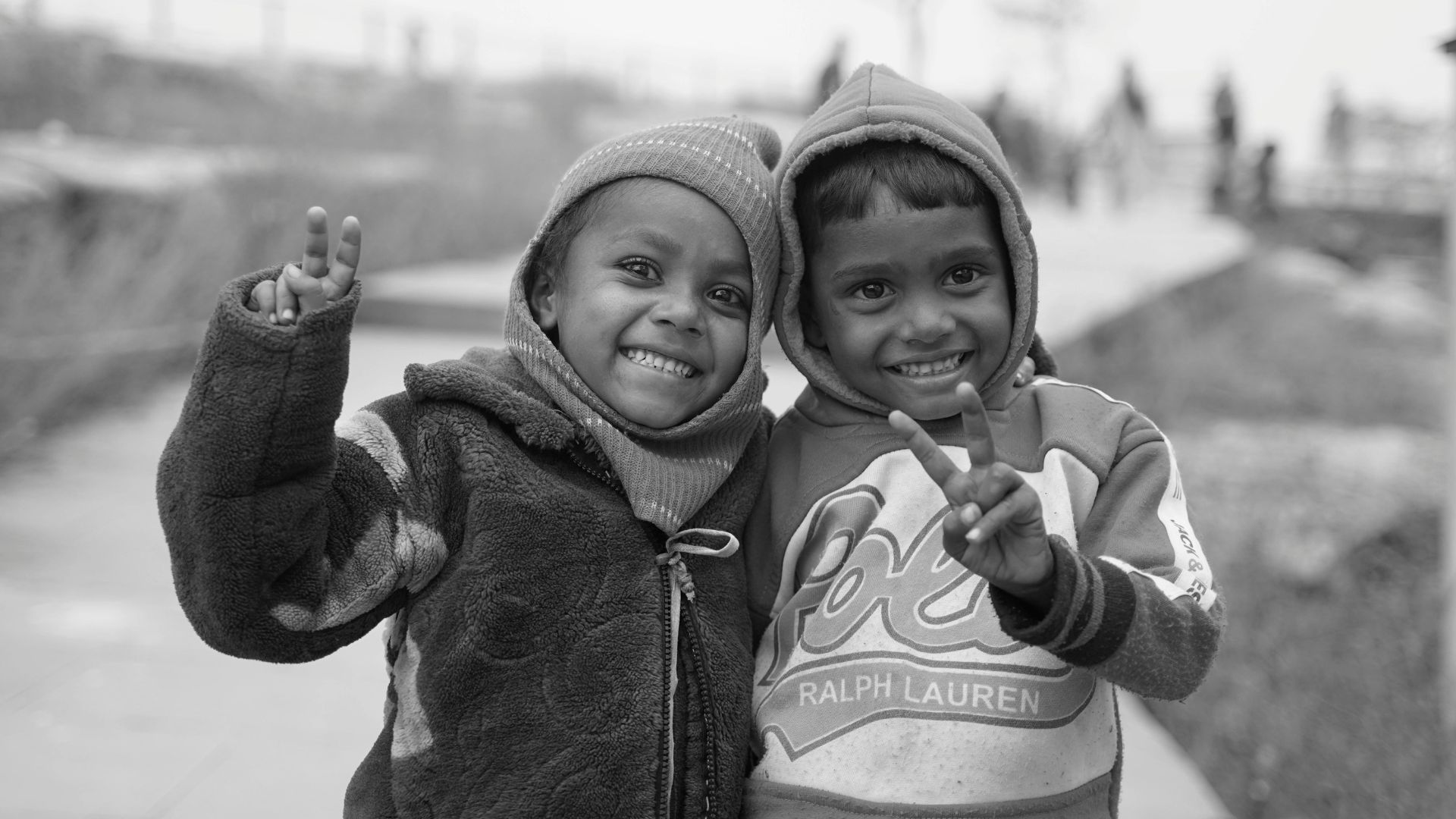
I have long said that I see the faces of my children and grandchildren in the faces of people around the world. I want for every one of them what I want for the people I love most. This inquiry has made me want to keep my eyes and heart open—to resist the ease of looking away simply because something is far from me, complicated, or painful to understand. I cannot know everything or respond to everything. But I can pay attention. I can care. I can keep asking what is mine to do.
This writing is one answer.
During Meeting This Moment, GTS founder Lynnaea Lumbard says, “We are participants in our evolution. It’s not just happening to us. We are happening to evolution.”
Peace asks us to recognize that we have a part in the conditions we continually create for one another.
We will not all mediate between tribes or carry our own chairs into the United Nations. Most of us will begin much closer to home. And what we do there still belongs to the whole.
We are already participating in what humanity becomes next. Peace asks us to participate with intention.
I cannot know everything or respond to everything. But I can pay attention. I can care. I can keep asking what is mine to do.


